NWI (Cowardin) Descriptions
This section provides an overview of the National Wetland Inventory classification system and its codes. The Classification of Wetlands and Deepwater Habitats of the United States (Cowardin et al. 1979) was developed to support a detailed inventory and periodic monitoring of the Nation’s wet habitats using remote sensing. It became a National Standard in 1996 (FGDC-STD-004), but has been the de facto standard for mapping U.S. wetlands and deepwater habitats since 1976.
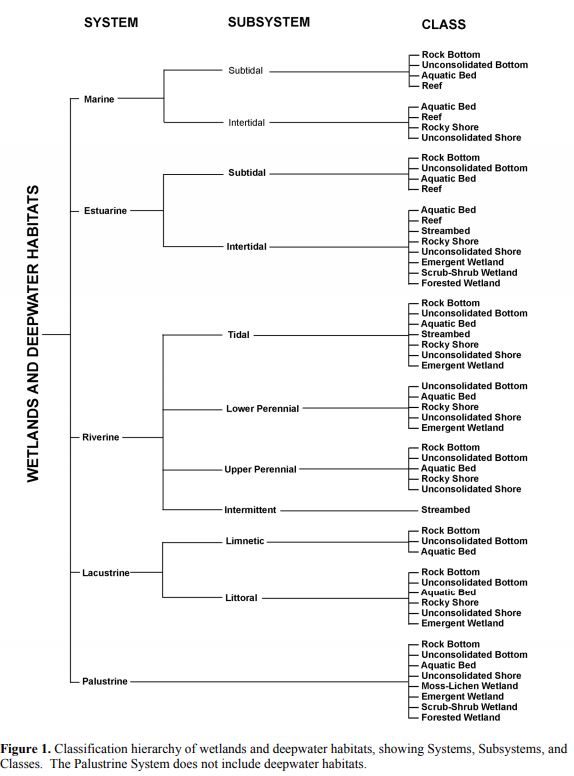
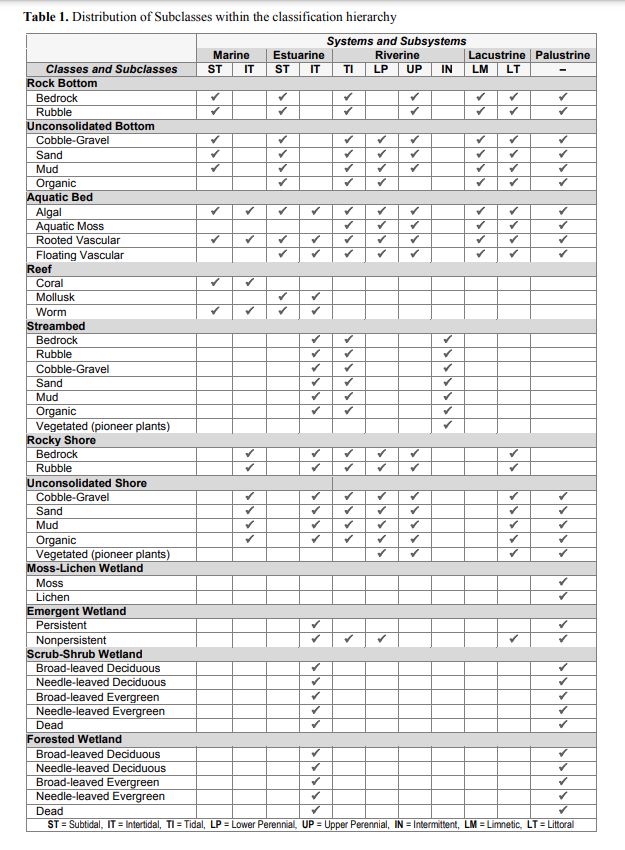
The structure of this classification is hierarchical, progressing from Systems and Subsystems at the most general levels to Classes, Subclasses, and Dominance Types. Figure 1 illustrates the classification structure through the Class level. Table 1 lists the Subclasses that occur within each System, Subsystem and Class. Modifiers for Water Regime, Water Chemistry, and Soil are applied to Classes and Subclasses. Special Modifiers describe wetlands and deepwater habitats that have been either created or highly modified by humans or beaver.
Created with the Personal Edition of HelpNDoc: Free CHM Help documentation generator